For those who prefer doing Read this article all kinds of home improvement projects themselves, tree removal could be on that list, but only in certain conditions. Here are some smart DIY tree removal tips.
Large Tree Removal
There are ways of safely removing a tree yourself, but only if it’s small enough. As soon as you have to get on a ladder to reach and remove tree limbs, that tree is too big for you to remove safely without help.
Getting up on a ladder with a chainsaw is a recipe for disaster. You’re putting yourself and any surrounding structure at risk. Falling tree limbs are large and unpredictable, a dangerous combo.
For large tree removal, the safest suggestion is calling a certified company to do the work for you. They have the equipment, experience, and insurance needed to do the job safely.
DIY Tree Removal
If the tree is small enough to remove it without climbing a ladder or hitting a nearby structure or power lines, it’s easier to do it yourself. You may still want to consult with a certified arborist before starting the project. When you’re ready to take on the project, here are some tips to keep in mind.
Evaluate the situation. Prune any broken branches and notice if the tree is leaning to one side. It’s more likely to fall towards the side of the lean.
Estimate a falling zone and clear the area. The unpredictability of a falling tree requires you to be prepared for anything. Clear the brush around the tree and choose two different escape routes.
Water around the tree the day before you plan to start so that the soil is easier to dig.
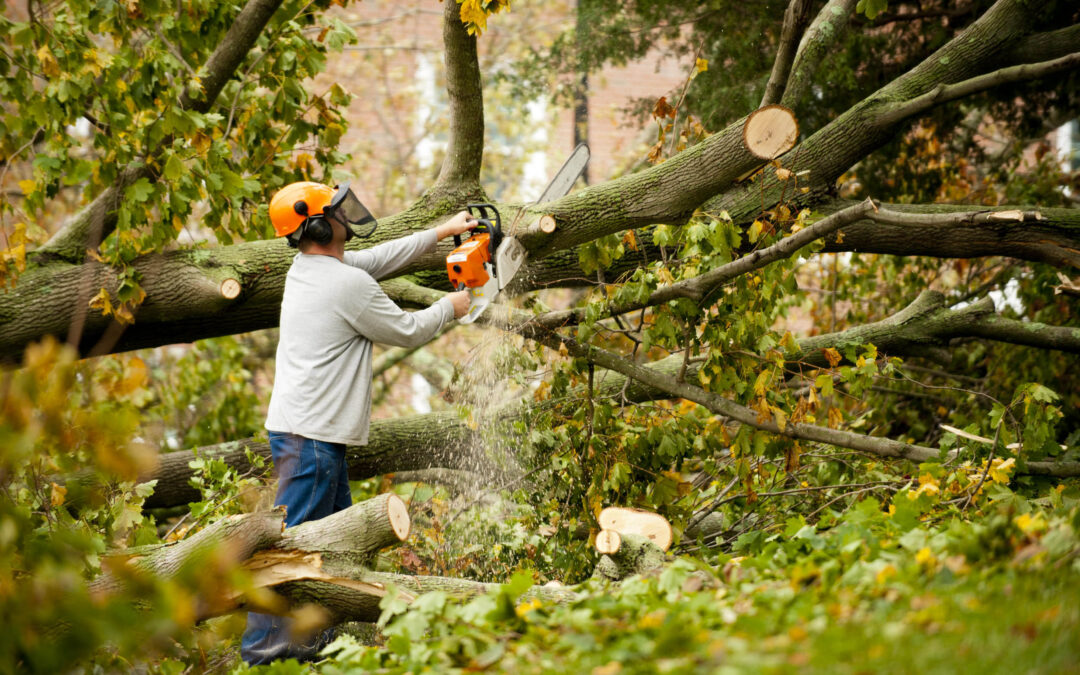
Wear proper gear. Goggles, gloves, earplugs, helmet, anything that will keep you safe and comfortable while using a chainsaw and around falling branches.
Measure your tree trunk. For every inch, plan to dig six inches deep to reach the entire root system. Roots are also likely to extend out to the outer edge of the tree’s canopy. Use these measurements to start digging around your tree.
Cut a notch on the side of the trunk you want the tree to fall. Make the top cut first and then the bottom. Score a line connecting the notch on both sides for a cutting guide. The back cut should be parallel and even with the apex of the notch. Then make the felling cut. When the tree begins leaning, pull the saw free and head toward one of your escape routes, keeping an eye on the tree so you can react if it doesn’t fall the way you planned. Never look away from a falling tree.
Enlist a lookout. You’ll be a lot safer if you have a trusted assistant standing a few feet behind you watching for falling branches and letting you know when the tree starts to fall.
If the tree is small enough, remove the root ball. Using leverage, wiggle ball out. Keep the roots intact if you plan on transplanting the tree. Cut it up with a chainsaw for disposal.
For larger trees, once it’s on the ground, start cutting off branches. Start at the bottom of the trunk and work up. Cut the trunk into more manageable hauling pieces or firewood.
 Site Title